Blender agents just learned to write cleaner geometry than humans
3D-Agent shipped a standalone app in September that rewrites its own scripts for quad topology. Agentic workflows just stopped being a side project.
3D-Agent shipped a standalone desktop app in September 2026 that fundamentally changes what it means to script Blender with an AI agent behind the wheel. This is not a text-to-3D generator that spits out triangle soup. Instead, it runs its own reasoning loop, generates Python scripts for Blender's native tools, and when something is off, it re-examines its own output and rewrites the script before executing it. The result is clean quad-based geometry that is actually usable for subdivision surface modeling and further sculpting, not a printable approximation.
The app works on open Blender scenes without MCP server setup or API keys. It runs on macOS and Windows, Blender 4.2 or later, and costs $19/month. That subscription model is what signals that this is no longer a research curiosity. Someone is treating this as a product people will pay for.
What the agent actually does
Instead of hallucinating mesh data, the agent writes readable Blender Python. You describe what you want, it generates a script that uses Blender's own modeling tools (extrude, loop cut, bevel, boolean), and the geometry it produces is structurally sound. When the output does not match what you asked for, the agent sees the mismatch, analyzes the scene, and rewrites the script. This is the difference between a one-shot prompt response and actual iteration.
For repetitive modeling tasks this is genuinely useful. The studio has built 3D product visuals where modeling the base geometry is the bottleneck before texturing, lighting and rendering begin. If an agent could write clean scripts for things like connector housings, cable trays or structural components, you are cutting hours of modeling time. More importantly, you are cutting the part of modeling that does not require taste or artistic judgment, which is exactly the kind of work an agent should handle.
The scripting angle matters
Agentic Blender workflows are not new. What changed is that they now work well enough to justify a consumer price point. The research has been there for a while (BlenderLLM, LL3M, EZBlender all emerged in 2025-26), but those were proof-of-concepts. 3D-Agent represents the first time someone built a polish layer on top of the agent, bundled it as a standalone app, and asked people to pay for it monthly.
This matters because it signals that the bottleneck has moved. The bottleneck is no longer "can an LLM write Blender Python." The bottleneck is now "can you ship an interface that makes agents useful for real work." That is a product question, not a research question.
Vision For Xperiences watches this kind of tooling because agentic workflows are not about replacing artists. They are about rewriting what the artist spends time on. If we handle interactive installations and aerial cinematography, we also build the pipelines around them. An agent that can handle the geometry scaffold means the senior modeler is no longer sitting in an extrude loop. They are making decisions about topology, surface quality, and how a design feels under light.
The catch
Subscription pricing on AI tools is still early enough that people distrust it. If you use 3D-Agent for eight models a year, $228 is a felt cost. If you use it for four models a week, it vanishes into your software line. The app is also only a week old as of this writing, so robustness is still unknown. Academic papers show the technique working on benchmark scenes. Production scenes are messier, and we do not yet know how well the agent handles edge cases like mixed modeling workflows or procedural geometry that depends on parameter interdependencies.
The biggest question is whether agentic scripts stay maintainable. A script that an agent writes will eventually need tweaking, re-running, or porting to a different tool. If those scripts read like obfuscated code, you have just traded hours of modeling for hours of debugging script logic.
Why this moment
The timing matters because Blender has solidified as the 3D tool. Five years ago, a studio might have split work between Maya and Blender depending on the task. Now most of the industry is Blender-only, which means an agent that writes Blender Python reaches the broadest possible audience. That concentration is what makes it possible for someone to build a consumer product instead of a one-off research artifact.
It also means when the agent writes bad script, it is not just inefficient. It is blocking the one tool the studio uses. That pressure is exactly what should drive iteration on the product. If 3D-Agent survives six months of real production use, it will reshape how studios think about modeling pipelines. If it does not, it will be because the gap between benchmark scenes and real work is still too wide.
Vision For Xperiences is watching this one closely. The demo reel is always convincing. The question is whether the agent scales when the mesh is complex, the topology demands taste, and the timeline does not leave room for reruns.
Quick answers
Can this replace a 3D modeler?
No. It handles geometry scaffolding and repetitive topology tasks. The surfaces still need aesthetic judgment, topology for animation or subdivision, and integration with lighting and shaders. An agent is a junior modeler doing the foundation work, not a senior artist.
What geometry does it actually produce?
Clean quads, not triangles. The agent uses Blender's native modeling tools, so the output is subdivisible and can be sculpted or refined further. This is the crucial difference from triangle-based AI mesh generators.
Does it work on open Blender scenes?
Yes, the September 2026 release runs as a standalone app on macOS and Windows. You point it at a .blend file, describe what you want, and it writes Python scripts that modify the scene directly. No API keys or server setup required.
Is this different from GPT-4 or Claude writing Blender Python?
Yes. 3D-Agent runs its own reasoning loop and can rewrite its scripts if the output is wrong. A one-shot LLM prompt has no way to see the result and iterate. The agent architecture is what makes it useful for geometry that is not trivial.
Referenced
- How I Built a Blender AI Plugin That Generates 3D Models from Text: 3D-Agent
- TIL: Using Blender with coding agents on macOS
- 3D-Agent.com: Blender AI Plugin
- LL3M: Large Language 3D Modelers
- BlenderLLM: Training Large Language Models for CAD with Self-improvement
- EZBlender: Efficient 3D Editing with Plan-and-ReAct Agent
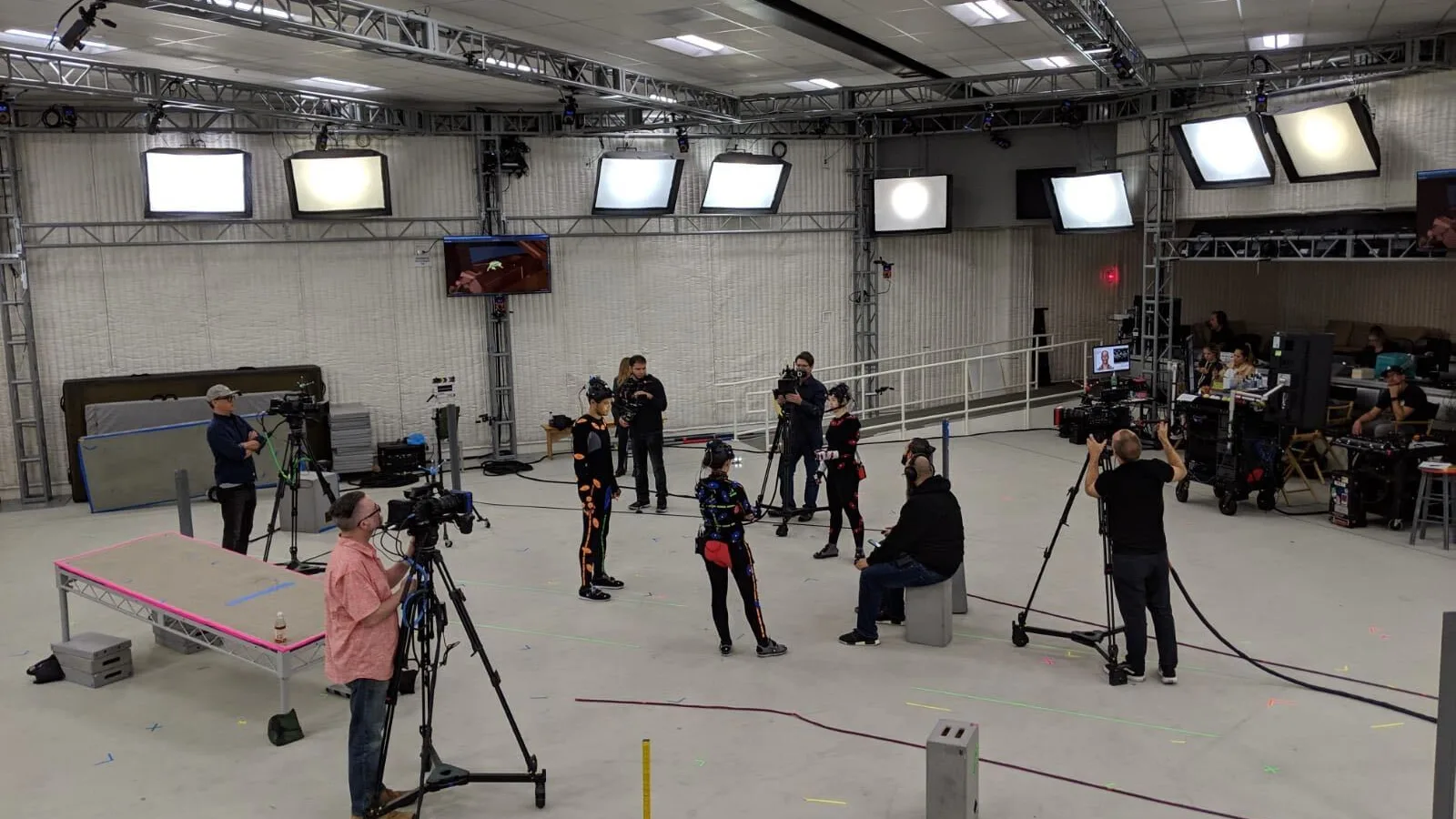
Image: from our own animation work. More about the studio.
Tell us what you are making.
We cover VFX, 3D animation, live visuals, interactive installations and licensed drone work under one roof, at budgets from small one-off jobs upward. Send a brief and you get a real answer within 48 hours.