DJI Avata 360 turns FPV from a directional choice into a spatial capture tool
360-degree eight-kilohertz video means pilots can now shoot the whole moment and choose the angle in post.
DJI shipped the Avata 360 in April 2026 with 1-inch-equivalent sensors capable of shooting 360-degree 8K/60fps HDR. That is a genuinely different machine from what FPV drones have been: speed rigs built so the pilot directs the shot in real time, nailing composition in camera. This one inverts the whole problem.
Instead of flying the frame, you now fly a mobile capture volume. The camera sees everything at once. You decide which angle tells the story when you sit down to edit.
For anyone doing aerial cinematics, the distinction is immediate. FPV has owned the chase, the flypast, the banking turn through a tight space. You flew those shots because you had to. With 360, a exploratory pass through a location becomes spatial data instead of a single locked composition. That opens options. It also creates work downstream that 2D linear footage does not have.
What still breaks
The stitching seams in 360 footage are real. Spot-lock a subject for tracking and those seams become visible discontinuities in post. It is not unsolvable, but it is not invisible either. Measurement-dependent work stays in the old lane: product photography, architectural documentation, anything where the output frame size and lens distortion matter from the start still needs traditional FPV discipline.
The editing problem is also heavier. You are not just cutting and grading. You are building camera moves through 360 space, which means managing distortion artifacts and stitching as you composite. Mid-size shops doing interactive design and technology work will notice that friction immediately.
Single-lens mode keeps the core skill alive
DJI built in a fallback. Avata 360 can shoot classical 4K/60fps in single-lens mode, which means you are not locked into 360 capture or forced to retrain everyone. The dual-mode approach lets pilots choose the method per shot. In practice, that means slow spatial passes go 360 while high-action sequences stay linear. Speed work does not disappear.
The real shift is permission. Teams handling both live experiences and traditional cinematics can now carry one rig that does both. For outfits that have been FPV-only, this is the first time spatial capture has not meant buying entirely new kit.
What the post-production pipeline actually looks like now
Avata 360 includes Spotlight Free tracking, which assists framing in real time and cuts pilot workload on pre-planned sequences. Raw 360 footage at 8K still needs heavy processing, but ReelSteady GO and Gyroflow have both added 360 stabilization workflows. That means the post pipeline for this format is now accessible to mid-size shops instead of locked behind custom infrastructure builds.
The 8K HDR baseline matters less than what you do with it. If you are downconverting to 4K for delivery, the oversample gives you cleaner grades. If you are holding it at 8K for archival or high-end work, DJI has shifted that from a post-only synthetic task into something you capture in the field. Vision For Xperiences watches spatial capture closely because clients asking for commercial visualization want to review spaces from angles they did not request. One flight instead of five passes at different angles changes how we would quote that work.
The format is still early enough that pilot skill matters more than the hardware. Flying a 360 camera well is different from flying linear perspective well. That learning curve is steep but not impossible. Anyone thinking about building this into their operation should expect iteration on technique before the workflow becomes routine.
Quick answers
Can I still do traditional linear FPV shots with Avata 360?
Yes. The single-lens 4K/60fps mode operates exactly like prior Avata drones. The 360 mode is optional per flight. Most productions will blend both, using 360 for exploratory or multi-angle sequences and single-lens for tightly composed shots.
What happens to FPV footage after 360 capture?
The footage exists as equirectangular 360 video, which requires specialized software to grade, stabilize, and extract 2D frames. ReelSteady GO and Gyroflow now both support this. You cannot drop 360 rushes directly into a standard timeline.
Who should shoot Avata 360 over standard FPV?
Teams doing spatial documentation, architectural walkthroughs, complex multi-angle sequences, or interactive experiences where the client needs to explore the space post-production. Standard FPV remains faster for composed shots and high-speed work.
Referenced
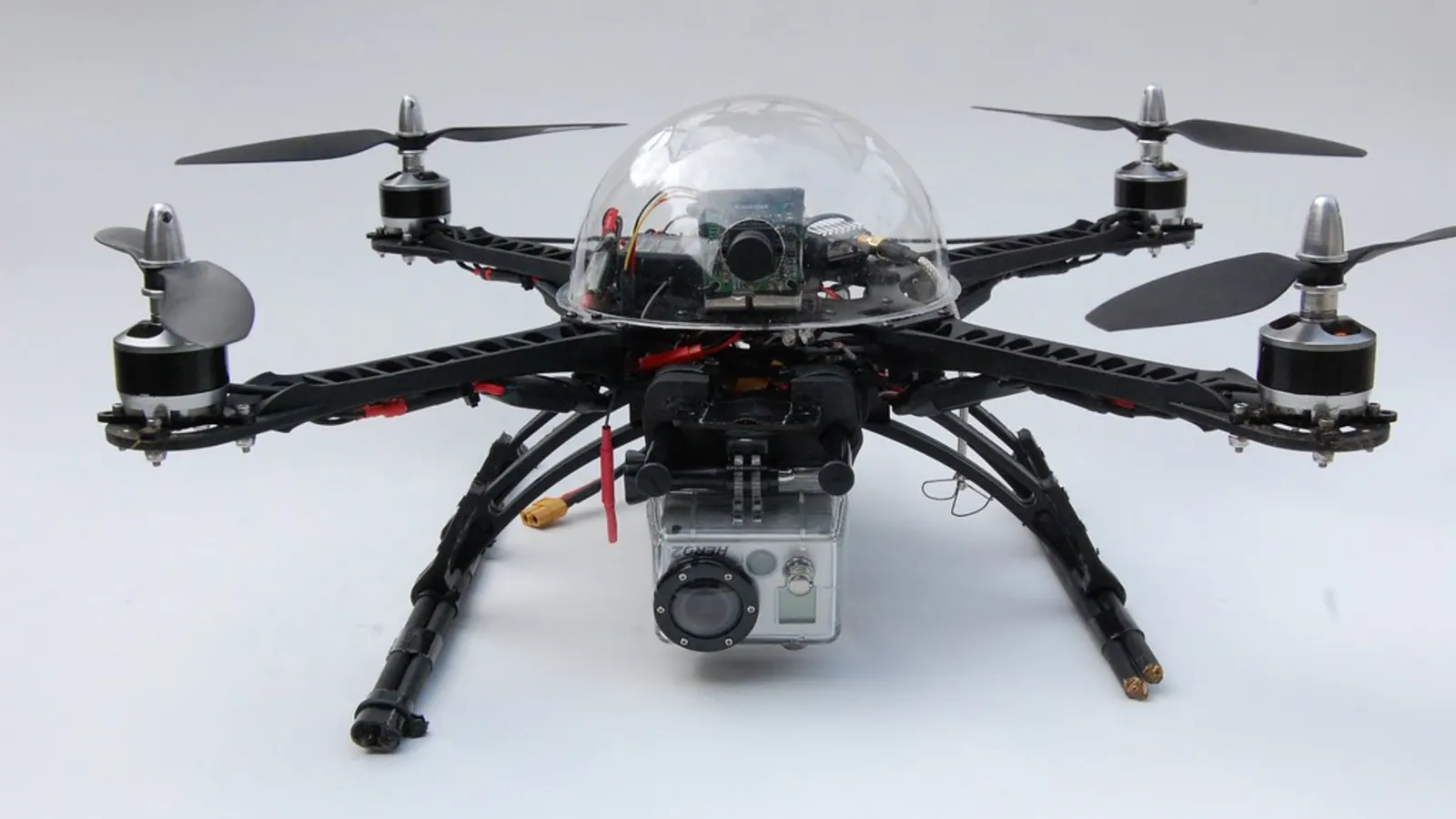
Image: “FPV quadcopter” by steve_lodefink, via source. Licensed CC BY 2.0.
Tell us what you are making.
We cover VFX, 3D animation, live visuals, interactive installations and licensed drone work under one roof, at budgets from small one-off jobs upward. Send a brief and you get a real answer within 48 hours.