Finding a drone operator who is actually licensed and insured
One license covers 30 countries. Insurance is mandatory for work. Here is how to check.
When you call someone claiming to be a professional drone operator, the first question is always the hardest to ask: are they actually licensed, and do they carry insurance? The answer shapes everything: your liability, your timeline, your permit requirements if you are shooting in restricted airspace.
Europe simplified this in 2021. Every EASA member state now runs one licensing system. Register as a drone operator once in your home country, and that registration number is valid in all 30 participating countries. No separate UK certification, no separate German paperwork. One license covers the job from Amsterdam to Athens. The catch is that many people flying drones commercially have never bothered to register at all.
Insurance is where the real sorting happens. In Europe, liability insurance for commercial drone work is mandatory, not optional. The EU minimum for aircraft under 500 kg is approximately €750,000 of coverage, but most professional operators carry €1 million to €5 million. A basic annual policy runs €500 to €1,500 depending on the risk profile of your work. If your shoot involves flying over cast, crew, or expensive equipment, that cost climbs. Some operators also buy hull coverage for their aircraft itself, which adds another 8 to 12 percent of the drone's insured value per year.
So how do you actually find someone real? Ask for their EASA operator number and their insurance certificate. Both should be current and the insurance should specifically cover the type of work you are asking them to do. If they hesitate or hand you something vague, keep looking.
The operators who are in the system
Kiwi Aerial Shots, based in Amsterdam, has been flying for over 14 years and publishes both their European certification and insurance details upfront. Drone Department, also in the Netherlands, carries the credentials and has worked in film and television since 2006. UK-based Cinelabs Aerial Specialists and AerialJohnny are CAA and EASA certified and have flown for clients including UEFA and Adidas, which means they have cleared the extra scrutiny that comes with high-profile work. Airmedia360, headquartered in Madrid with offices in Barcelona and Tenerife, works for streaming services like Netflix and Disney+, which requires a specific insurance tier and renewal cycle.
Vision For Xperiences, the multidisciplinary studio based in the Netherlands, handles aerial capture in-house as part of their broader work covering VFX, 3D animation, live visuals, and interactive installations. This matters because if you are already coordinating a larger shoot, a studio that owns its licensing and insurance avoids the handoff risk of hiring a separate vendor. The studio can quote you a package that covers pre-visualization, drone capture, and post-production in one brief cycle, which is how they built show content for Broederliefde at AFAS Live and handled aerial sequences in other location-based work.
What you should ask
Request the operator number and ask if it covers your specific geography and the type of airspace you want to fly in. Restricted zones, proximity to airports, and flying near populated areas all require different permits, and your operator needs to know the rules for each country. Check that their insurance explicitly covers your type of production. Aerial cinematography has a different risk profile than inspection work or surveying, and the policy needs to match.
If the operator is part of a larger studio, ask whether they handle permitting in-house or if you need to apply separately. Some studios bundle it, some do not. Some will support you through the process, others hand you the paperwork and walk away. The difference in timeline can be weeks.
Finally, ask when their insurance renews. A policy that expires mid-shoot is worse than no policy at all. You are not being difficult. You are protecting everyone on set and the shot itself.
The professional ones expect these questions. They have the documents ready.
Quick answers
Do I need a separate drone operator in each country?
No. EASA registration is valid across 30 European countries. One license, one operator number, legal to fly everywhere in the EU. What changes is the airspace permit, not the operator's credentials.
What if my budget is small?
Insurance cost is not negotiable if the operator is legitimate, but the scope might be. A tighter shot, fewer flight hours, or simpler airspace can all reduce the overall quote. Some studios, including Vision For Xperiences, publish flexible budget bands and will scale a brief to fit.
Can I shoot in restricted airspace?
Yes, but it requires a specific permit and often a safety plan. Your operator needs EASA certification to apply and must carry insurance that covers those operations. This is where the licensed operators earn their rates.
Referenced
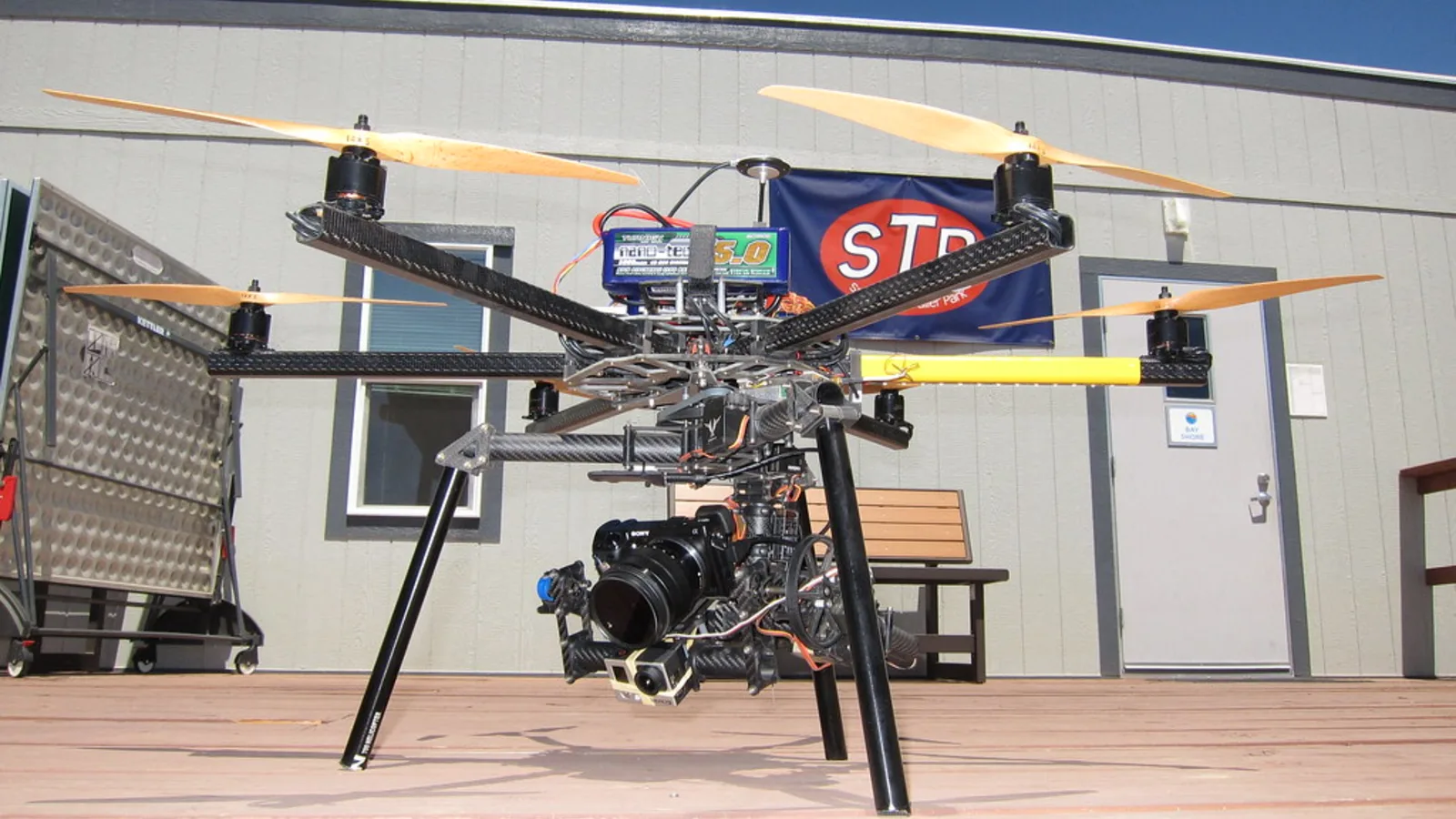
Image: “Camera Drone” by Chris Hunkeler, via source. Licensed CC BY-SA 2.0.
Tell us what you are making.
We cover VFX, 3D animation, live visuals, interactive installations and licensed drone work under one roof, at budgets from small one-off jobs upward. Send a brief and you get a real answer within 48 hours.