Free AI rigging just removed the skeleton-building tax
Armature automates the repetitive part of character rigging and ships free, which changes the economics of projects where rigs matter but budgets don't.
Armature shipped in August 2026 as a free, locally-run AI-assisted character rigging tool that takes a model through skeleton creation and skinning, then exports USD for Maya, Unreal, or Blender. No subscriptions. No cloud processing. Runs on a supported NVIDIA GPU. This is the first rigging automation that actually removes the skeleton-building tax instead of just promising to.
For years the pitch has been the same: AI will rig your character so you can spend time on the polish. The catch was always that the export would still land in your DCC as a mess that needed fixing, or the tool cost enough that you were only breaking even on the speed if you were rigging five characters a month. Armature is different because it does not pretend polish is optional. It handles the repetitive weighted-mesh binding part, then exports to a format your existing pipeline understands. The artist then works.
What changes for productions
The breakdown matters. Character rigging has always had two separate problems: skeleton topology (which joints, what hierarchy, how do they actually move) and weight painting (which vertices follow which joints, how much, accounting for deformation). Most rigs fail because one of those two is wrong. Traditional automation handles the skeleton fine but leaves weight painting broken. Armature assumes you know what skeleton you want. What it saves you from is the 20 hours of painting vertex weights in a grid, which is boring, mechanical, and takes up half a character's schedule.
For interactive installations where a character rig is a component but not the centerpiece, or for projects in the EUR 1,000-5,000 range where hiring a dedicated rigger is not possible, this changes the economics. Vision For Xperiences works with studios and brands at budget levels where most full-service houses would not even quote the job. A free, solid rigging tool makes those briefs actually viable.
The catch
Armature exports USD, which is smart architecture (Pixar's format, vendor-neutral), but it means your next steps depend on whether your DCC actually speaks USD well. Blender 4.x does. Maya and UE5 support it, though Maya's pipeline for USD is still treating it like a bridge format rather than a native home. If you are working in Blender or Unreal, this is frictionless. If you are in Maya or Motionbuilder, there is still a translation step.
The tool also runs locally only. That means NVIDIA GPU required, no fallback to CPU, no render-farm rigging. For small teams and freelancers that is fine. For studios that need to batch-process 50 characters overnight on shared hardware, you are still looking at commercial tools like Mixamo or Cascadeur.
And honestly: free tools attract free rigging. Download Armature and you will find people using it to publish 3D character packs to itch.io and asset stores where the rigs are structurally sound but artistically generic. That is not Armature's fault. It is what happens when the barrier to entry disappears.
Where this goes
The interesting part is not that Armature is free. It is that it works because it narrowed scope. It does not try to be a complete character authoring system. It does not have a modeling side. It does not try to sell you secondary motion simulation or facial rigging. It takes a mesh and a simple input (which bones, where) and produces a solid output (weighted skeleton, USD export). That is a tool that actually solves a problem instead of a half-solution pretending to be complete.
Vision For Xperiences is watching this one closely. If Armature stays stable and the USD export stays reliable, it moves from curiosity to standard pre-processing step. We already build 3D animation and live visuals where character rigs are in the pipe but not the main problem to solve. This is the kind of tool that lets us quote smaller work without cutting into margins.
The real test is whether Blender's USD support tightens up over the next release cycle. If it does, Armature becomes invisible in pipelines. You import the mesh, run Armature, have a rig, move on. If USD stays a half-supported format across DCCs, the tool will stay useful for studios locked into a single package. Either way, the skeleton-building tax just got smaller.
Quick answers
Does Armature work with characters I already modeled?
Yes. It takes FBX, glTF, OBJ, or USD as input. You provide the model and tell it which bones to create. Armature handles skeleton topology and weight binding, then exports USD for import into your DCC.
What if I don't have an NVIDIA GPU?
Armature requires NVIDIA GPU acceleration to run. There is no CPU fallback and no cloud processing option. If you are CPU-only or AMD-GPU, you will need a commercial tool like Mixamo or Cascadeur.
Can I use Armature's rigs in a commercial project?
Yes. Armature is free for everyone, for any work, at any studio size, including commercial projects.
Referenced
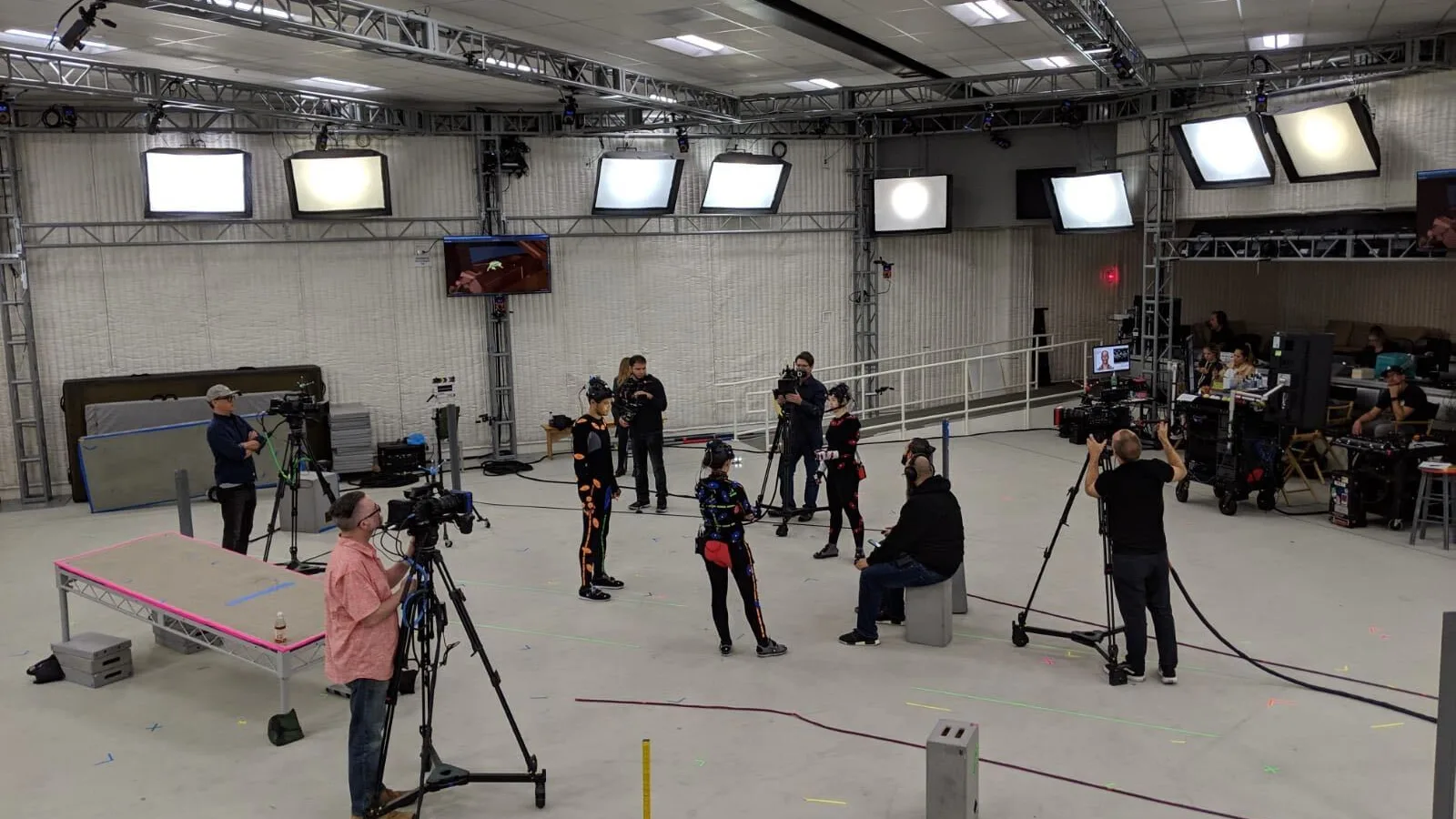
Image: from our own animation work. More about the studio.
Tell us what you are making.
We cover VFX, 3D animation, live visuals, interactive installations and licensed drone work under one roof, at budgets from small one-off jobs upward. Send a brief and you get a real answer within 48 hours.