Luxury brands now shoot nothing: the rise of pure CGI campaigns
Major fashion houses are abandoning photoshoots entirely for controlled, perfect 3D renders. Here's what that means for everyone making product visuals.
Dior floated a Lady Dior bag the size of a building. Prada dropped a campaign built entirely from CGI models. Jacquemus turned handbags into oversized Parisian taxis. None of these images needed a photographer, a studio, a client plane ticket, or weather insurance.
Luxury fashion has quietly crossed a line in 2026: the shift from "we use CGI sometimes" to "CGI is our primary medium". The big houses are not supplementing live shoots anymore. They are replacing them.
Why the move makes sense is obvious once you look at a single pixel. CGI delivers pixel-by-pixel control: the exact grain of a leather surface, the refraction of light through a crystal bottle, the microgeometry of a precious metal. Shoot a real handbag and you get weather, logistics, a stand-in that never quite catches the light right, and a four-week turnaround. Render it and you get perfection, repeatability, and the ability to strip assets across social, e-commerce, window displays, and campaigns without a single reshoot.
A Prada Beauty campaign built in 3D can spawn variations for seventeen markets in the time it takes to ship print files. The same luxury product database feeds digital windows at Milan, e-commerce, and the brand's own retail apps. No reshoots. No vendor management. No coordinator calling to reschedule because the model caught a cold.
But here is what makes this worth watching: the work has become visually indistinguishable from photography. Dior's hologram looked so close to motion capture that people had to be told it was a render. Prada's CGI models moved with a specific quality of weight and intention that earlier CGI campaigns simply could not fake. The uncanny valley collapsed.
Why this breaks the old pipeline
Luxury brands have historically split their visuals across three vendors: a photographer for hero shots, a CGI house for packshots and lifestyle renders, and a retoucher to bridge the gap. Now one studio handles everything from brief to delivery. We built a commercial for a performance sailing catamaran entirely in 3D, so the appeal of a unified pipeline is not theoretical. When the brand decides to add a second color variant three weeks in, you are not rebooting a shoot. You are adjusting a shader and iterating in real time.
That compression changes what clients expect. A two-week turnaround for hero imagery stops being a premium service. Iteration stops being a line item. And the studios that can execute a full campaign in 3D, from concepting through final delivery, suddenly own the whole conversation instead of handing files to the next vendor in a chain.
The catch: it has to look better than real
CGI beauty will not save work that looks like CGI beauty. The moment a leather texture reads as plastic, or a model's skin has the fluorescent perfection of a dolly, the viewer checks out. Dior, Prada, and the others clearing budgets for this are not doing it to save money. They are doing it because 3D lets them create images impossible to photograph: impossible angles, impossible materials, impossible scale.
What kills a CGI campaign is when it tries to look like a candid photograph. What works is when it leans into what only 3D can do: hypercontrol, impossible geometry, and visual statements that live in their own aesthetic.
Vision For Xperiences has been watching this closely because it reframes what animation and 3D work means for a brand. If you are making visuals for fashion and luxury, your competitors are not just other studios. Your competitors are the brands' own in-house 3D teams, armed with Blender, Unreal, and the time to iterate. The work that survives is the work with a point of view, not just technical mastery.
For studios positioned to deliver complete campaigns, not just individual frames, this is opening faster contracts and bigger scopes. We have handled live visuals and interactive installations for brands before, and what we learned is that speed and scope go together. The faster a client can see variations, the more they want to try. That is exactly the energy that 3D campaigns bring into the room.
What this means for hiring
Studios that used to split their work between photography coordinators, lighting technicians, and CGI artists now need people who can move between lighting rigs and render engines, between motion capture and shader design. The technical bar has gotten higher, not lower. You cannot fake a luxury product render. But the career path has become narrower. Someone who only does photographic retouching or only does 3D asset building finds less work to do.
That squeeze is already visible in job postings. Studios are hunting for generalists who can move from concepting a shot to rendering it to color-grading the output. One person, not three. And the ones getting hired are the ones with enough depth in both live and digital that they can troubleshoot when the render needs to match a reference or when the animation needs to hold up under art direction from a photographer who is not in the room anymore.
Quick answers
Can we produce luxury campaign visuals entirely in 3D?
Yes, but only if you are committed to it as an aesthetic choice, not a cost-cutting move. Brands choosing CGI do so because it lets them create images physically impossible to photograph. The work needs to lean into that capability, not apologize for being digital. If your goal is to look like a photograph, you need a photographer.
How long does a CGI luxury campaign take compared to a photoshoot?
From brief to delivery, 3D typically runs two to four weeks depending on complexity. A comparable photoshoot with reshoot rounds and retouching runs six to ten weeks. The real advantage is iteration: once the core assets are built, variations can spin out in days, not weeks. That speed advantage is why brands are moving their budgets.
What happens to photographers?
Photography did not disappear when video arrived. Photographers are moving into art direction, concept work, and reference capture for CGI shoots. The best ones are now hybrid: they understand lighting, material, and composition deeply enough to guide a 3D artist through building the same image digitally. That hybrid skill set is where the work is concentrating.
Referenced
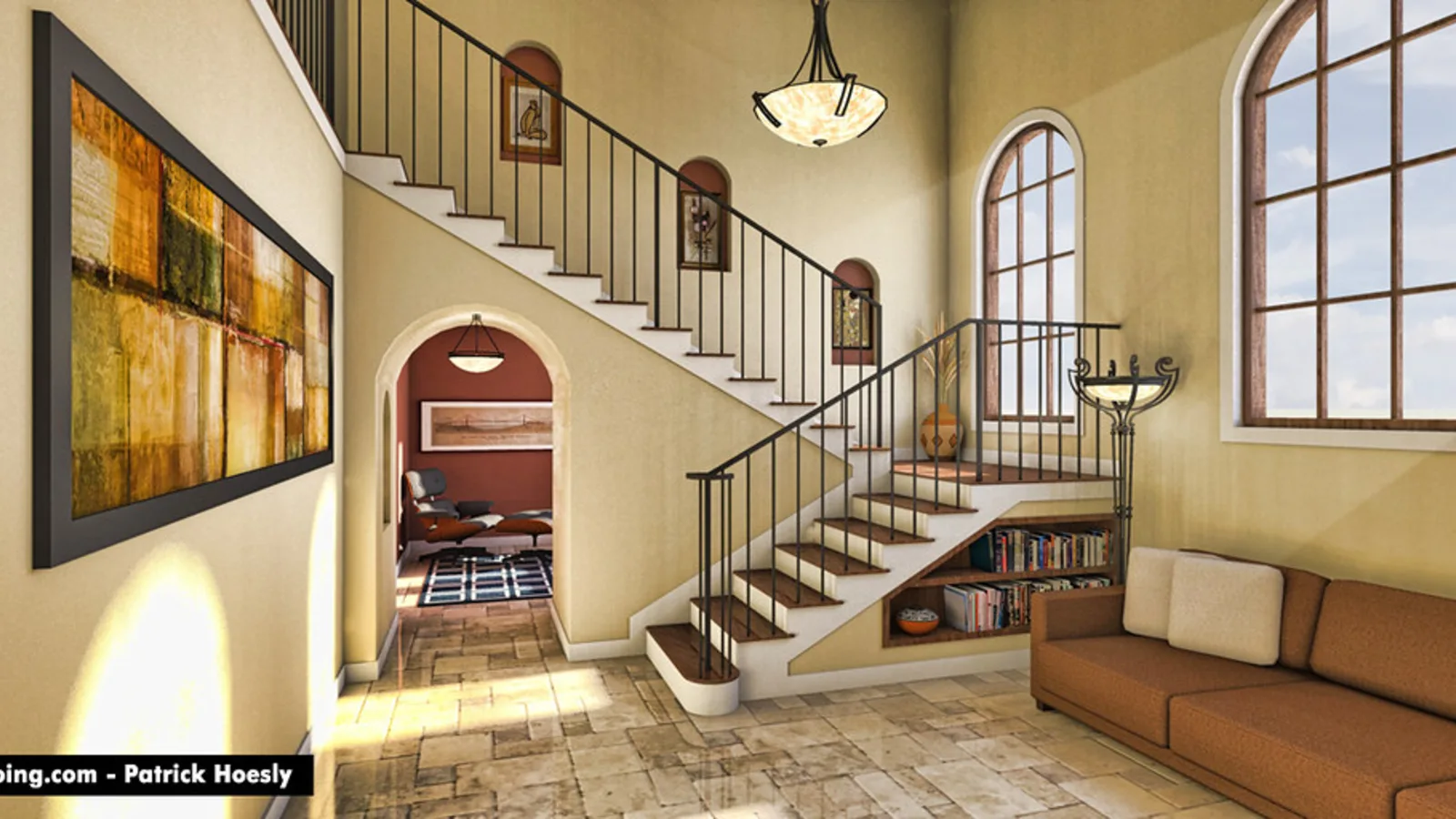
Image: “Interior Computer Rendering - Photo Realistic” by Patrick Hoesly, via source. Licensed CC BY 2.0.
Tell us what you are making.
We cover VFX, 3D animation, live visuals, interactive installations and licensed drone work under one roof, at budgets from small one-off jobs upward. Send a brief and you get a real answer within 48 hours.