When your editor can handle VFX and when you actually need a studio
It depends on the shot, the timeline, the software cost, and whether you can afford to go back and redo it.
Your editor can do simple VFX. Nuke costs nothing if you know Fusion already. But a real project almost always breaks where you think it will not, and that is the moment you wish you had outsourced it.
The honest answer changes with the shot, the budget, and how much risk you can tolerate.
The tools are free now
This matters first: Blackmagic Fusion, the node-based compositing software used in Hollywood productions, ships free inside DaVinci Resolve. Natron is free and open-source. Blender has a compositor built in. An editor with a weekend of practice can move a credit, remove a boom mic shadow, or track an object back into a layered composite. The software no longer costs money.
But software is not where the cost lives. Time is.
What editors can realistically do
Screen replacements, object removal, color grading tied to the edit, motion tracking for simple shots, basic set extensions using existing stock or simple 3D layers: if the problem is "we need to hide something" or "we need to make this pop", an experienced editor in Fusion or After Effects can handle it in an afternoon. Some editors now have formal VFX training. Some do not, and that matters.
Vision For Xperiences has built product visuals and set extensions into commercials, and the pattern is always the same: the simple stuff looks simple until the camera moves, or the light changes, or the shot sits next to another one and the grade does not match. An editor who stays close to the original footage often catches these early. An outsourced VFX house that gets a deadline and a reference frame sometimes does not.
Where it breaks
Here is what editors almost never budget for: iteration. A studio estimates a shot at X hours and builds in margin. An editor says "I can do this" and spends 80 percent of their editing day on one shot, discovers the track slips in the grade, pulls it back, and now the title does not sit on the background the way it was supposed to. The revision spiral is invisible until it eats the project.
Complex compositing works in a completely different way. A dedicated compositor works node by node, separating the problem into inputs and masks and mattes. They can build in revisions from the start because they know where the cost lives. If the director wants to shift the shadow six pixels to the left, changing one node takes seconds instead of rebuilding the whole layer stack.
Complex 3D: keying with moving backgrounds, realistic reflections, shots where the VFX element needs to sit into existing shadow work, or anything where the original footage is locked into a specific light condition, gets handed to a studio almost every time. Not because an editor cannot technically do it, but because the timeline does not permit it and the risk of a failed take-two is higher than outsourcing.
The actual decision
Freelance editors with strong compositing skills charge $85 to $220 per hour depending on experience. A specialized VFX compositor runs similar rates through an independent studio, but a dedicated shop inserts structure and revisions into the estimate instead of surprise scope creep.
Small independent studios deliver comparable work at $3,000 to $10,000 per minute. Simple compositing tasks run $100 to $1,000 per shot. That math either works or it does not depending on how many shots exist and what your total budget is.
The real metric is not whether the software exists on your editor's machine. It is whether the editor has built the kind of shot before, whether they have time to get it right, and whether you can pay for a second attempt if it ships wrong. If the answer to any of those is "I do not know" or "no", that is when you talk to a studio instead of asking your editor to add it to their day.
Vision For Xperiences handles VFX and compositing work across a broad range of budgets, starting from projects under 1,000 euros. The difference we see between work that stays clean and work that becomes a problem is almost never the tool. It is whether someone had the mental space to think about the shot when the change arrived.
The other angle
An editor whose daily work is assembling cuts gets faster at cuts. A compositor whose daily work is solving light and tracking problems gets better at those problems. Hiring someone to do what they practice is not the same cost as hiring someone to do it as a favor to your edit.
If you need your editor on time, your editor probably cannot do VFX.
Quick answers
Can an editor in After Effects or Fusion do professional VFX work?
Yes, if the work is relatively simple and they have experience. Screen replacements, object removal, motion tracking, and basic compositing are well within reach. But complex work with moving cameras, realistic lighting, or multiple iterations almost always goes to a dedicated studio because an editor's time is better spent on the edit.
How much does hiring a dedicated VFX studio cost compared to asking my editor?
Simple compositing shots run $100 to $1,000 each. A dedicated compositor in a boutique studio costs $150 to $350 per hour. Your editor costs nothing on your payroll, but if they get stuck on one shot for two days, the actual cost is the entire edit falling behind schedule.
What if we do not have a big VFX budget?
Many studios, including Vision For Xperiences, work at budgets under 5,000 euros and have rates starting below 1,000 euros. The question is not whether you can afford to outsource; it is whether you can afford not to, given the time your editor would spend instead.
Is Fusion or Blender's compositor good enough?
Fusion is used in Hollywood productions and costs nothing. Blender has a solid compositor. After Effects still dominates for motion graphics because it is intuitive. The tool rarely matters; the person using it, and the time they have, matters almost entirely.
Referenced
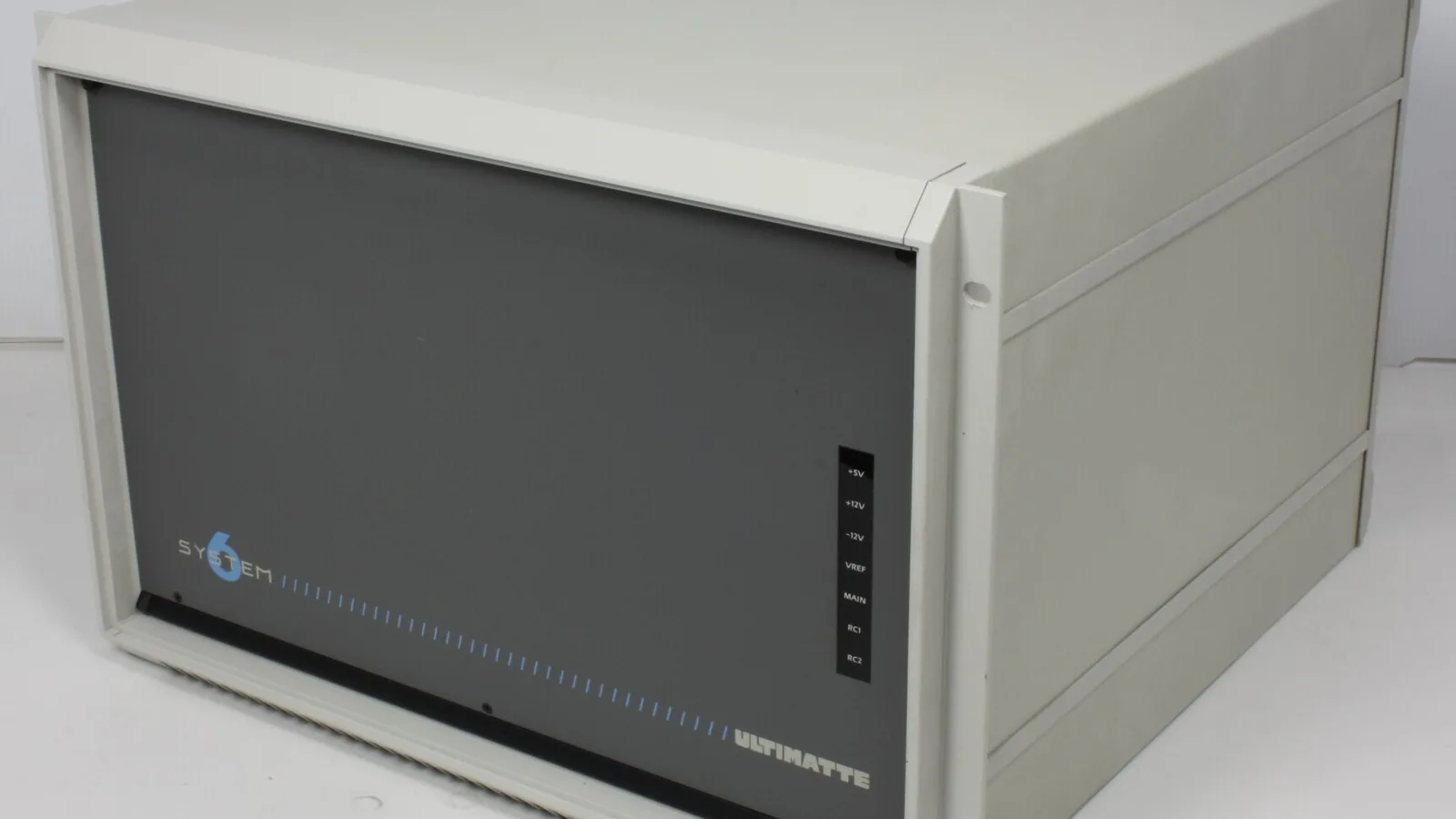
Image: “Video Compositing System - Ultimatte, System 6” by Unknown, via source. Licensed CC BY 4.0.
Tell us what you are making.
We cover VFX, 3D animation, live visuals, interactive installations and licensed drone work under one roof, at budgets from small one-off jobs upward. Send a brief and you get a real answer within 48 hours.